The purpose of this blog is to provide analytical commentary on formal and informal labour organisations and their attempts to resist ever more brutal forms of exploitation in today’s neo-liberal, global capitalism.

Monday, 4 July 2022

Public Water Services in times of emergency: the case of the Covid19 outbreak.

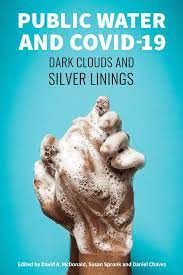
The Covid19 outbreak has underlined once again the importance of basic services for human life, including water services. At the same time, it re-opened the debate on the role of the state in managing such services. How did public water operators react to the outbreak of the Covid19 pandemic? The book Public Water and Covid-19: Dark Clouds and Silver Linings (Transnational Institute, 2021), edited by David McDonald, Susan Spronk and Daniel Chavez, provides some answer(s) to this question. In this guest post, Gemma Gasseau provides a critical review of the book’s key contributions.

Monday, 27 June 2022

Fighting for Water: Resisting Privatization in Europe – first reviews

My book Fighting for Water: Resisting Privatization in Europe (Zed Books, 2021) was published one year ago. From the successful referendum against water privatization in Italy, via the European Citizens’ Initiative on ‘Water and Sanitation are a Human Right’, to the struggles against water privatization in Greece and water charges in Ireland, I demonstrate why water has been a fruitful arena for resistance against neoliberal restructuring.


Since the publication, several reviews have been published, all available on the internet. This blog post brings them together.


Sunday, 12 June 2022

Put Out More Flags! The Platinum Jubilee and the long arm of history.

70 years on the throne are truly remarkable. Unsurprisingly, people up and down the country poured into the streets to celebrate the anniversary of Queen Elizabeth II over four days from 2 to 5 June. Houses were decorated with Union Jacks and red-white-blue bunting, thousands of street parties organised across the country. While many of my left-wing British friends fled in horror either abroad or to some hidden place in the countryside to escape it all, I happily stayed back and joined in. After all, what can possibly be wrong with neighbourhoods coming together and celebrating jointly? This was not the moment to engage in critical discussions about unelected Heads of State or the virtues of Republics, I thought. It should not take long, however, before the darker undersides revealed themselves.


Thursday, 28 April 2022

The Critique of Commodification: Moving towards a use-value society?

In his new book
The Critique of Commodification – Contours of a Postcapitalist Society (OUP, 2021) Christoph Hermann critical investigates the concept of commodification and relates the associated dynamics to current political economy developments. Importantly, he demonstrates how production for profit instead of human needs results in enormously harmful consequences for humanity and nature alike. In this blog post, I will discuss some of the key contributions of this highly important book.


Friday, 11 March 2022

The Limits to Commercial Capitalism

In his latest book A Brief History of Commercial Capitalism (Haymarket Books, 2020), Jairus Banaji provides a masterful overview of historical trading relationships in Europe. At the same time, this book also reveals once more the limits of an understanding of capitalism, focused on market exchange relations. In this blog post, I will provide a critical review drawing out the weaknesses of such an approach.


Friday, 4 March 2022

Capitalist expansion, the war in Ukraine and three decades of missed opportunities in Europe

There had been huge hopes for a peaceful, prosperous future in a united Europe after the fall of the Berlin Wall in 1989 and the collapse of the Soviet Union in 1991. Three decades later, the war in Ukraine has brought these hopes to an end. In this post, I will argue that the seeds for the current crisis were sown right at the beginning of the post – Cold War period in the 1990s, when capitalist social relations of production were imposed on Central and Eastern Europe (CEE) backed up by NATO military power.


Sunday, 27 February 2022

Workers solidarity in the EU multilevel system: When and where can it occur?

Trade unions have the task to organise collectively and establish relations of solidarity amongst working people. And yet, they have often found it difficult to extend this solidarity across borders within the European Union (EU). In this blog post, I will argue that while the capitalist dynamics of Uneven and Combined Development (U&CD) make transnational solidarity often difficult, it is not impossible either. Especially if we expand our understanding of labour movements beyond trade unions and also include social movements such as environmental groups in our definition, then labour movements have on a number of occasions demonstrated their ability to defend the interest of society against capitalist exploitation. Most notably, I will refer to the European Citizens’ Initiative (ECI) ‘Water and Sanitation are a Human Right’ as well as the resistance against the Transatlantic Trade and Investment Partnership (TTIP).